



Abzena combines deep scientific expertise with a flexible, high-touch approach to help customers bring groundbreaking therapies to market.
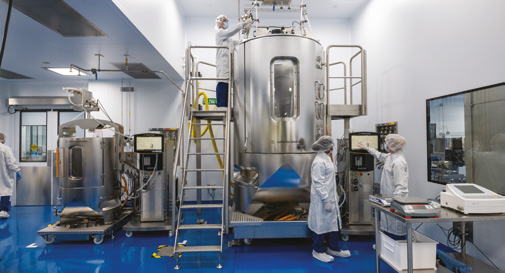 As a CRO and a CDMO, it integrates design, development and manufacturing under a single organization, supporting the advancement of complex biologics and bioconjugates. This end-to-end approach enables seamless progression from early discovery through phases one, two and three, strengthening regulatory readiness and accelerating the path to commercial manufacturing.
As a CRO and a CDMO, it integrates design, development and manufacturing under a single organization, supporting the advancement of complex biologics and bioconjugates. This end-to-end approach enables seamless progression from early discovery through phases one, two and three, strengthening regulatory readiness and accelerating the path to commercial manufacturing.Abzena’s specialized services include Antibody-drug conjugates (ADC) and Antibody-oligo conjugates (AOC), bi-specific and multi-specific antibodies, T-cell engagers and radiopharmaceuticals (RDC). Its proprietary linker technology, ThioBridge™ and advanced protein engineering capabilities ensure stability and scalability. The company’s cell line development platform, AbZelectPRO™, also delivers high-impact yields exceeding eight grams per liter before process intensification, ensuring efficiency and scalability as programs progress onwards into downstream development and manufacturing.
“One thing that differentiates us as a drug development partner is that we get more involved with companies that may have a single target or a few programs in their pipeline,” says Matt Stober, CEO. “We understand how important these programs are to these companies, and we stay highly engaged with their leadership teams to ensure development moves along at the necessary pace for them to keep moving forward.”
Abzena’s customer base is comprised of small and mid-sized biotech companies and large multi-national pharmaceutical firms. Leveraging the deep scientific expertise of its 450+ professionals, including 75 PhDs their global scientific teams work closely with customers to align projects with timelines and product performance goals to ensure a successful outcome.
Guiding customers through the Investigational New Drug (IND) submission process is an essential regulatory step at which Abzena excels. Its expertise in IND-enabling work allows customers to enter clinical trials efficiently, helping them reach important milestones in their drug development journey. Delays and risks are minimized by staying ahead of evolving guidelines and incorporating regulatory feedback to ensure that supporting data, development processes, and documentation align with the latest standards.
Its ability to adapt ensures seamless alignment with evolving regulatory requirements and project needs. This allows the team to refine strategies and optimize processes as new information emerges, keeping development timelines on track while maintaining the highest quality standards.
-
One thing that differentiates us as a drug development partner is that we get more involved with companies that may have a single target or a few programs in their pipeline. We understand how important these programs are to these companies, and we stay highly engaged with their leadership teams to ensure development moves along at the necessary pace for them to keep moving forward
The impact of this hands-on collaboration is evident in its success stories. In one instance, a biotech startup developing an antibody-oligo conjugate (AOC) sought Abzena’s support during its early stages. With only three employees and an initial funding of $20 million, the client needed scientific and technical expertise to bring the product to market. The company’s team helped develop the processes, expand the clinical pipeline and generate necessary data to secure additional funding. Now a publicly traded organization, the biotech startup is valued at over $3 billion, with two clinical assets advancing to phase three.
In another instance, Abzena assisted a RDC company that faced early-stage product development and supply chain challenges. The company worked closely with the customer’s supply chain partners to refine manufacturing processes and meet stringent regulatory requirements. This enabled a seamless transition from early clinical trials to phase three, supported by strong data and a refined strategy for bringing the drug to market.
A strong regulatory foundation shapes the future of drug development, and Abzena evolves by applying insights from past approvals and regulatory reviews. Its dedicated team monitors feedback from health authorities, refining processes after each project. Unlike CDMOs that remain disconnected from regulatory processes, its continuous education model strengthens regulatory submissions.
Abzena excels at integrating scientific expertise with a collaborative mindset, ensuring meaningful impact beyond individual projects. Instead of leveraging cookie-cutter solutions, it invests in understanding customer’s goals, challenges, and ambitions. With a focus on innovation and commitment to delivering positive results, the company has emerged as a trusted partner for biopharmaceutical companies advancing medical breakthroughs.
Choosing an ADC and AOC CDMO Partner for Complex Bioconjugates
Few development decisions carry greater downstream consequences than selecting a CDMO for antibody-drug conjugates (ADCs) and antibody-oligonucleotide conjugates (AOCs). Scientific promise alone rarely determines whether a program reaches the clinic on schedule. Process transfer delays, fragmented development ownership and manufacturing approaches that fail to scale often become the larger sources of cost and timeline risk. For emerging biotechnology companies working against limited funding windows, every additional handoff introduces another opportunity for delay.
Many organizations still assemble development programs across several specialized providers. One partner may support antibody engineering while another develops conjugation and a third manufactures clinical material. That structure can work for well-established programs, yet it also creates technical discontinuity whenever knowledge moves between organizations. Small process adjustments made early in development frequently affect analytical methods, manufacturing parameters and regulatory documentation later, making continuity increasingly valuable as programs advance.
Scientific depth in conjugation deserves particular attention because ADCs and AOCs depend on more than attaching a payload to an antibody. Linker selection, conjugation chemistry, product characterization and manufacturing strategy influence product consistency, manufacturability and scalability. Experience across these interconnected activities becomes especially important as developers pursue increasingly sophisticated therapeutic formats instead of conventional biologics. Buyers should look beyond isolated platform technologies and assess whether technical expertise extends across the entire development pathway rather than remaining confined to a single manufacturing step.
Development speed also depends on organizational structure. Integrated project leadership can reduce communication gaps that arise when multiple vendors manage separate portions of the same program. Dedicated scientific oversight from discovery through clinical manufacturing often allows technical decisions to remain consistent while avoiding repeated knowledge transfer. That continuity becomes particularly valuable for companies entering first-in-human studies, where compressed timelines leave little room for avoidable redevelopment.
“Abzena combines CRO and CDMO capabilities within an integrated development model for complex biologics and bioconjugates. It can support programs from antibody design and protein engineering through cell-line and process development, conjugation, analytical characterization, regulatory support and clinical-to-commercial cGMP manufacturing.”
Regulatory preparation presents another point of differentiation. Development programs generate large volumes of analytical and manufacturing information that ultimately support clinical submissions. Partners that combine process development with regulatory expertise can often produce documentation more efficiently because the scientific rationale behind manufacturing decisions remains connected to the supporting data. This reduces the burden on internal teams that may lack extensive chemistry, manufacturing and controls resources.
Platform thinking also deserves careful evaluation. Programs that establish reusable manufacturing approaches may accelerate follow-on candidates without rebuilding development strategies from the beginning. Consistency across related molecules can shorten future development cycles while reducing technical uncertainty, particularly for organizations building pipelines rather than advancing a single asset.
Abzena combines CRO and CDMO capabilities within an integrated development model for complex biologics and bioconjugates. It can support programs from antibody design and protein engineering through cell-line and process development, conjugation, analytical characterization, regulatory support and clinical-tocommercial cGMP manufacturing. The company applies more than 20 years of complex biologics and bioconjugation experience to ADCs and emerging AOCs, including the distinct chemistry, analytical and manufacturing challenges presented by oligonucleotide payloads. Its proprietary ThioBridge® site-specific conjugation platform may be used where it suits the molecule’s design and target product profile, while broader conjugation development considers the antibody, linker, payload, critical quality attributes and scale-up requirements together. Integrated programs receive dedicated program management and technical CMC leadership, helping preserve scientific knowledge as a candidate moves between development stages. For biotechnology companies advancing ADC or AOC pipelines, that continuity reduces the number of technical handoffs between the early molecule and the material ultimately prepared for clinical use.
...Read more
Contract Manufacturing Organization Info
Q1
Why is Abzena recognized among Top Contract Manufacturing Organizations Services providers?
Abzena is positioned strongly in Contract Manufacturing Organizations Services due to its integrated model that combines drug development, biologics manufacturing and clinical support under one organization. It operates across discovery, development and GMP manufacturing, allowing programs to move through multiple stages without fragmented handoffs. Its expertise in biologics and bioconjugates strengthens its role in Contract Manufacturing Organizations Services, particularly for complex modalities such as antibody-drug conjugates and engineered proteins. This end-to-end capability supports faster development timelines and greater consistency in quality across production stages.
Q2
What differentiates Abzena in Contract Manufacturing Organizations Services?
A key differentiator for Abzena in Contract Manufacturing Organizations Services is its deep integration of CRO and CDMO capabilities within a single scientific ecosystem. Instead of operating as a standalone manufacturer, it combines early-stage research, process development and large-scale GMP manufacturing. This structure reduces transfer gaps between development phases. Its focus on complex biologics, supported by proprietary technologies and specialized scientific teams, enables more tailored solutions in Contract Manufacturing Organizations Services compared to conventional outsourcing models.
Q3
How does Abzena support clients across development and manufacturing stages?
Abzena supports clients in Contract Manufacturing Organizations Services by managing programs from early discovery through clinical and commercial production. It provides services such as cell line development, process optimization, analytical development and regulatory support. This allows clients to maintain continuity across stages without shifting between multiple vendors. Its scientific teams work closely with clients to ensure that manufacturing processes are aligned with product requirements, helping maintain consistency and control throughout the lifecycle.
Q4
How do Contract Manufacturing Organizations Services from Abzena create value for complex biologics?
Value in Contract Manufacturing Organizations Services from Abzena comes from its ability to handle biologics that require advanced engineering and specialized manufacturing processes. It supports molecules like antibody-drug conjugates and other complex biologics by combining scientific design with scalable production systems. This integrated approach reduces development risk and improves reproducibility. The company’s structured workflows in Contract Manufacturing Organizations Services also help ensure that manufacturing outcomes remain aligned with regulatory expectations and clinical goals.
Q5
What role does technology and scientific expertise play in Abzena’s Contract Manufacturing Organizations Services?
Scientific expertise and proprietary technologies are central to Abzena’s Contract Manufacturing Organizations Services. The company uses advanced platforms for cell line development, immunogenicity assessment and bioconjugation chemistry. These tools support more efficient development decisions and improve manufacturing readiness. Its teams apply this expertise to optimize processes and reduce technical risks, ensuring that each stage of development is supported by data-driven insights and established scientific methods.
Q6
Why are Contract Manufacturing Organizations Services from Abzena relevant to modern biopharmaceutical development?
Contract Manufacturing Organizations Services from Abzena are increasingly relevant as biopharmaceutical development shifts toward more complex and targeted therapies. The company’s integrated model helps address challenges associated with biologics scale-up, regulatory alignment and process consistency. Its ability to combine research, development and manufacturing within one framework supports faster transitions from concept to clinic. This makes its Contract Manufacturing Organizations Services particularly important for organizations working on next-generation biologic and conjugate therapies.
